Tuesday, May 31, 2011

Connected to the Future

by Lawrence Hardy, American School Board Journal Senior Editor

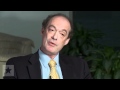
A North Carolina school district is transformed by a one-to-one computing program, raising student achievement and sparking creativity in classrooms and homes alike.  (Dr. Mark Edwards, Supt.)


Fourth- through 12th-grade students at Mooresville Graded School District each receive a laptop in a one-to-one computing program that has resulted in remarkable gains in student achievement and increased graduation rates. Mooresville teachers say the program has fundamentally changed the way they do their jobs.


Click here for the complete article.

Friday, May 27, 2011

Five myths about America’s schools


Challenging everything you think you know By Paul Farhi, Published: May 20
1. Our schools are failing.
It’s true that schools with large numbers of low-income and English-as-a-second-language students don’t perform as well as those with lots of middle- and upper-middle-class students who speak only English. But the demonization of some schools as “dropout factories” masks an important achievement: The percentage of Americans earning a high school diploma has been rising for 30 years. According to the Department of Education, the percentage of 16-to-24-year-olds who were not enrolled in school and hadn’t earned a diploma or its equivalent fell to 8 percent in 2008.
Average SAT and ACT scores are also up, even with many more — and more diverse — test-takers. On international exams such as the Trends in International Mathematics and Science Study, U.S. elementary and middle school students have improved since 1995 and rank near the top among developed countries. Americans do lag behind students in Asian nations such as Singapore, Taiwan, Hong Kong, South Korea and Japan on these tests, but so do Europeans. The gap in math and science scores may be an East-West divide.

The end of the school year and the layoffs of tens of thousands of teachers are bringing more attention to reformers’ calls to remake public schools. Today’s school reform movement conflates the motivations and agendas of politicians seeking reelection, religious figures looking to spread the faith and bureaucrats trying to save a dime. Despite an often earnest desire to help our nation’s children, reformers have spread some fundamental misunderstandings about public education.
2. Unions defend bad teachers.
Unions have proved amenable to removing the bad apples in their ranks — with due process. Montgomery County, for instance, implemented its Peer Assistance and Review program with union cooperation a decade ago. It requires every new teacher and those flagged as “underperforming” by a principal to be observed by a specialist over a school year. All teachers get support, advice and a chance to do better; then they are reevaluated.Those who fall short lose their jobs. Between 2006 and 2010, 245 teachers resigned or were dismissed. Many districts have similar programs, but, as a Harvard studypointed out, they are expensive.
Reformers who attack unions for school problems should mind their logic: Some school systems show better results than others, yet most have teachers’ unions. If unions are universally problematic, why are some students succeeding while others languish?
3. Billionaires know best.
Bill Gates, real estate developer Eli Broad and Facebook chief Mark Zuckerberg have made massive financial contributions to public schools to promote pay-for-performance programs, which reward teachers with bonuses when their students do better on standardized tests. They argue that merit pay creates the same incentives for public-sector employees that bonuses do in the private sector.
But the emerging research on merit pay for teachers disputes that.
In a three-year, $10 million study released last fall, Vanderbilt University researchers found no significant difference in performance between students who were taught by middle school teachers eligible for cash bonuses and those who weren’t. That’s no surprise to most teachers; they know that teamwork is key to success. Individual pay-for-performance schemes create the opposite incentive, fostering competition, not collaboration.
Despite this, Gates alone is investing $290 million over seven years in schools in Memphis, Tampa, Pittsburgh and Los Angeles. Zuckerberg has endorsed New Jersey Gov. Chris Christie’s merit-pay agenda by pledging $100 millionover the next five years to Newark’s schools, whose budget this year is $940 million.
There’s no doubt that these schools can use every dime that rich guys give. But attaching strings for pet projects is elitist and wasteful.
4. Charter schools are the answer.
President Obama certainly thinks so. He’s said that state limits on the number of charter schools aren’t “good for our children, our economy or our country.” He and Education Secretary Arne Duncan want more charters — taxpayer-supported schools that operate independently of traditional public school systems. About 1.5 million children, or 3 percent of public school students, attended a charter school this past school year. Some have outperformed their non-charter peers, particularly in inner cities.
Credit for that may rest solely with the students, however. Charter school students are among the most motivated, as are their parents, who sought an alternative education for their children and mastered the intricacies of admission.
And siphoning off those better students through choice may create the same disastrous effect as de facto segregation through the geography of poverty — it leaves behind those least able to advocate for themselves and most susceptible to falling through the cracks.
All for results that are not uniformly impressive: A 2010 study of 2,330 middle school students at charter schools in 15 states found that they performed no better in math and science. And a Stanford University study in 2009 concluded: “Nearly half of the charter schools nationwide have results that are no different from the local public school options and over a third, 37 percent, deliver learning results that are significantly worse than their student[s] would have realized had they remained in traditional public schools.”
Despite this, Gates alone is investing $290 million over seven years in schools in Memphis, Tampa, Pittsburgh and Los Angeles. Zuckerberg has endorsed New Jersey Gov. Chris Christie’s merit-pay agenda by pledging $100 millionover the next five years to Newark’s schools, whose budget this year is $940 million.
There’s no doubt that these schools can use every dime that rich guys give. But attaching strings for pet projects is elitist and wasteful.
5. More effective teachers are the answer.
Former D.C. Schools chief Michelle Rhee and other big-city superintendents called for more effective teachers in a reform “manifesto” published in The Washington Post last fall. Well, sure. Who doesn’t want more effective teachers? While we’re at it, let’s get more effective superintendents, curriculum specialists and principals, too.
Let’s be realistic: Teachers aren’t miracle workers. There’s only so much they can do to address problems that troubled students bring to class every day, including neglect, abuse, and unaddressed medical and mental health issues. The obvious and subtle ways that poverty inhibits a child’s ability to learn — from hearing, visual and dental problems to higher asthma rates to diminished verbal interaction in the home — have been well-documented.
So let’s seek to improve the state of families. Attacking schools and teachers makes everyone feel like a reformer, but the problems begin long before a child steps through the schoolhouse door.
Paul Farhi is a reporter for The Washington Post.

The Service of Democratic Education


The Service of Democratic Education


At the commencement ceremony for Columbia University's Teachers College on May 18, Stanford education professor Linda Darling-Hammond—a nationally renowned leader in education reform and former education adviser to Barack Obama's presidential campaign—was awarded the Teachers College medal for distinguished service. Professor Darling-Hammond marked the occasion by delivering the following address:


I could not be more honored than to be awarded this recognition from Teachers College, one of the places of all those I know in the world that holds the tightest grip on my heart and best represents my values and beliefs. Thank you for this recognition—and, more important, thank you, Teachers College faculty, trustees, students and graduates, for who and what you are.
My first real glimpse of what Teachers College is and does occurred not in New York City but in a school in Washington, DC, where one of my children had transferred into a first grade classroom to avoid the truly terrible teaching that was literally undermining her health in another school. In her new school, Elena’s teacher, Miss Leslie, had created a wonderland of stimulating opportunities for learning: children experimenting and investigating in the classroom and the community, designing and conducting projects, writing and publishing their own little stories (one that my daughter wrote after the birth of her little brother was entitled “Send Him Back”). This teacher—who was in her very first year of practice—not only had created a classroom that any mother would want to send her child to, but she also had the skillful eye and knowledge base to figure out within weeks that Elena was severely dyslexic, to teach her to read without her ever being labeled or stigmatized, and to instill in my daughter a lifelong love of books and learning that has led to her being a literacy teacher working with special needs students today.
One day, I asked Miss Leslie how she had learned to do this miraculous work as a brand-new teacher. And she told me that she had learned to be this kind of teacher at Teachers College, Columbia University. She listed the courses she took in the Curriculum and Teaching department and the Special Education program that built her knowledge base and described what she learned with intensive supervision in a carefully designed clinical placement. It was then that I knew that a profession of teaching was possible, and I learned much more about what is possible in building a profession from my colleagues here and in our partner schools when I later came to teach at TC. I became persuaded that policy-makers needed to understand how to enable all educators to acquire the knowledge and skills that could truly allow all children to learn—rather than to try, as so many have, to manage teaching through mind-numbing, and ultimately futile, prescriptions for practice.
Teachers College has, for more than a century, represented the heartbeat of the education profession in the United States and our deepest aspirations for a democratic system of education. When TC was founded by Grace Dodge in 1887 as the New York School for the Training of Teachers, it was intended to provide a new kind of schooling for the teachers of the poor in New York City, one that combined a humanitarian concern for helping others with a scientific approach to human development and learning. At that time, when most teachers had little more than a high school education (and were frequently taught primarily to follow scripted textbooks that were popular at the time), TC teachers—a group of extraordinary women and men of all races, who came from all parts of the country—were earning masters degrees and were prepared for a research-based practice that was informed by the educational research also planted in the college: in psychology and sociology, in the content areas and in pedagogy. They, along with administrators and researchers in training, were also expected to develop a deep understanding of the history, philosophy and purposes of education and to be grounded in a set of strong values and ethics that guide all professionals.
Then, as now, the creation of truly professional educators was subversive business. As scientific managers were looking to make schools “efficient” in the early twentieth century—to manage schools with more tightly prescribed curriculum, more teacher-proof texts, more extensive testing, and more rules and regulations—they consciously sought to hire less well-educated teachers who would work for low wages and would go along with the new regime of prescribed lessons and pacing schedules without protest. In a book widely used for teacher training at that time, the need for "unquestioned obedience" was stressed as the "first rule of efficient service" for teachers.
No wonder that obedience was prized, when the scientific managers’ time and motion studies resulted in findings like the fact that some eighth grade classes did addition "at the rate of 35 combinations per minute" while others could “add at an average rate of 105 combinations per minute"—thus schools were to set the standard at 65 combinations per minute at 94 percent accuracy. One speaker at an NEA meeting in 1914 observed that there were “so many efficiency engineers running hand cars through the school houses in most large cities that the grade school teachers can hardly turn around in their rooms without butting into two or three of them.”
During that decade, precisely 100 years ago, nationally distributed tests of arithmetic, handwriting and English were put into use. Their results were used to compare students, teachers and schools; to report to the public; and even to award merit pay—a short-lived innovation due to the many problems it caused.
Does any of this sound familiar?
In the view of these brilliant managerial engineers, professionally trained teachers were considered troublesome, because they had their own ideas about education and frequently didn’t go along meekly with the plan.
As one such teacher wrote in The American Teacher in 1912:
We have yielded to the arrogance of "big business men" and have accepted their criteria of efficiency at their own valuation, without question. We have consented to measure the results of educational efforts in terms of price and product—the terms that prevail in the factory and the department store. But education, since it deals in the first place with human organisms, and in the second place with individualities, is not analogous to a standardizable manufacturing process. Education must measure its efficiency not in terms of so many promotions per dollar of expenditure, nor even in terms of so many student-hours per dollar of salary; it must measure its efficiency in terms of increased humanism, increased power to do, increased capacity to appreciate.
Sounds suspiciously like John Dewey and Maxine Greene, doesn’t it?
While the scientific managers’ foolishness was creating a stranglehold on schools under the banner of education reform, TC teachers, school leaders and professors (ranging from John Dewey to William Heard Kilpatrick to George Counts and more) were creating progressive schools in which students engaged in intellectual inquiry, hands-on projects and activity-based curriculum—guided by an understanding of child development, the new sciences of learning and emerging practices of pedagogy. These schools practiced democracy in action and provided a counterpoint to the factory model schooling that Dewey called “mechanical, dull, uninteresting, and hardly educative in any meaningful sense.”
Then as now, TC graduates set the standard. Highly educated and deeply committed, you and your colleagues have gone out to plant the ideals of democratic, progressive education as leaders in schools, colleges and governments all around the world. TC has always represented what a profession is meant to foster: 1) a strong ethical commitment to serve clients well—in the case of education, to make decisions based on what is best for students, not what is cheapest, easiest or most expedient; 2) mastery of a common body of knowledge and skills—and a commitment to always seek more and better knowledge to meet students’ needs (and oh, how I love that magical moment at TC when the doors fly open at around 4 pm and thousands of dedicated educators from all over New York, and even New Jersey and Connecticut, swarm into the building with such a thirst for professional knowledge to serve their students more fully); and 3) a commitment to define, transmit and enforce standards of practice—a community that pledges to work together to “do the right thing,” as Spike Lee put it.
That commitment is more important now than ever before. We live in a nation that is on the verge of forgetting its children. The United States now has a far higher poverty rate for children than any other industrialized country (25 percent, nearly double what it was thirty years ago); a more tattered safety net—more who are homeless, without healthcare and without food security; a more segregated and inequitable system of public education (a 10:1 ratio in spending across the country); a larger and more costly system of incarceration than any country in the world, including China (5 percent of the world’s population and 25 percent of its inmates), one that is now directly cutting into the money we should be spending on education; a defense budget larger than that of the next twenty countries combined; and greater disparities in wealth than any other leading country (the wealthiest 1 percent of individuals control 25 percent of the resources in the country; in New York City, the wealthiest 1 percent control 46 percent of the wealth and are taxed at a lower level than in the last sixty years). Our leaders do not talk about these things. They simply say of poor children, “Let them eat tests.”
And while there is lots of talk of international test score comparisons, there is too little talk about what high-performing countries actually do: fund schools equitably; invest in high-quality preparation, mentoring and professional development for teachers and leaders, completely at government expense; organize a curriculum around problem-solving and critical-thinking skills; and test students rarely—and never with multiple-choice tests.(Indeed, the top-performing nations increasingly rely on school-based assessments of learning that include challenging projects, investigations and performances, much like what leading educators have created here in the many innovative New York public schools.)
Meanwhile, the profession of teaching and our system of public education are under siege from another wave of scientific managers, who have forgotten that education is about opening minds to inquiry and imagination, not stuffing them like so many dead turkeys—that teaching is about enabling students to make sense of their experience, to use knowledge for their own ends, and to learn to learn, rather than to spend their childhoods bubbling in Scantron sheets to feed the voracious data banks that govern ever more decisions from the bowels of the bureaucracy.
These new scientific managers, like those of a century ago, prefer teachers with little training—who will come and go quickly, without costing much money, without vesting in the pension system and without raising many questions about an increasingly prescriptive system of testing and teaching that lines the pockets of private entrepreneurs (who provide teacher-proofed materials deemed necessary, by the way, in part because there are so many underprepared novices who leave before they learn to teach). Curriculum mandates and pacing guides that would “choke a horse,” as one teacher put it, threaten to replace the opportunities for teachable moments that expert teachers know how to create with their students.
The new scientific managers, like the Franklin Bobbitts before them, like to rank and sort students, teachers and schools—rewarding those at the top and punishing those at the bottom, something that the highest-achieving countries not only don’t do but often forbid. The present-day Bobbitts would create “efficiencies” by firing teachers and closing schools, while issuing multimillion-dollar contracts for testing and data systems to create more graphs, charts and report cards on which to rank and sort… well, just about everything.
And the new scientific managers cleverly construct systems that solve the problem of the poor by blaming the teachers and schools that seek to serve them, calling the deepening levels of severe poverty an “excuse,” rewarding schools that keep out and push out the highest-need students, and threatening those who work with new immigrant students still learning English and the growing number of those who are homeless, without healthcare or food security. Are there lower scores in under-resourced schools with high-need students? Fire the teachers and the principals. Close the schools. Don’t look for supports for their families and communities, equitable funding for public schools or investments in professional learning. Don’t worry about the fact that the next schools are—as researchers have documented—likely to do no better. This is the equivalent of deciding that if the banks are failing, we should fire the tellers. (And whatever you do, pay no attention to the man behind the curtain.)
But public education has a secret weapon—a Trojan horse, if you will: the members of the profession like yourselves who have mastered a strong body of professional knowledge, who hold a strong ethic of care and who are determined to transmit this knowledge and this commitment to others throughout the education system.
At Teachers College are those who are leading the fight for more equitable funding for public schools (and who won a major victory in New York state); there are those who are leading the efforts to create more thoughtful and creative curriculum and instructional strategies; and who are developing more effective teacher and leadership education and professional development.
Among those of you who are graduating are many who have created and will create more exciting and empowering schools for children; more useful and appropriate assessments of learning; and more just and humane policies to guide a system focused on learning, not selecting and sorting, rewarding and punishing. You will do this in the strong professional communities you have created here at TC and in your work in the field. You will carry on the work of building a profession that serves democratic education—one that provides for all children what the best and wisest parent wants for his or her child, as John Dewey put it.
Many of you have arrived here today with significant debt and at considerable personal sacrifice. But you are here because of the work to which you have committed your lives, and because you know that it is the right thing to do.
And doing the right thing—meeting that professional commitment—is not easy. Whether it is standing up for a child who is mistreated, or finding the energy to go that extra mile to reach out to a troubled parent, or taking up a challenging issue in the research, or taking on a difficult concern in the public discourse, doing the right thing is often hard. As King reminded us:
On some positions, Cowardice asks the question "Is it safe?" Expediency asks the question "Is it politic?" And Vanity comes along and asks the question "Is it popular?" But Conscience asks the question "Is it right?" And there comes a time when one must take a position that is neither safe, nor politic, nor popular, but he must do it because Conscience tells him it is right.
Take heart in knowing that the arc of history is long, as King noted, but it bends toward justice. Take courage in knowing that where a community of hands comes together to work toward justice, a freedom seed will grow. And take pride in knowing, when the work is challenging and setbacks come—as they must when anything important is happening—that you are building a better future for every child and family and community you touch. And remember, as Robert F. Kennedy observed:
It is from numberless diverse acts of courage and belief that human history is shaped. Each time a person stands up for an ideal, or acts to improve the lot of others, or strikes out against injustice, he sends forth a tiny ripple of hope.
Thank you for each and every time you do what is right for our children and for each ripple of hope you create. Thank you for your courage and your commitment. And thank you for spreading the spirit of Teachers College. Keep your hand on the plow…. Hold on!

Wednesday, May 25, 2011

Beware of Economists Bearing Education Reforms


 William J. Mathis
“As I see it,” wrote Paul Krugman, “the economics profession went astray because economists, as a group, mistook beauty, clad in impressive-looking mathematics, for truth.” Krugman himself is, of course, an economist (and a Nobel Prize winning one at that) which demonstrates that economists can indeed spot the pitfalls of their field. As an educator, when I review economists’ education reform ideas they, all too often, show manifestations of Krugman’s syndrome. They confuse mathematical symmetry with truth.
When applied to education, the pathology takes three identifiable forms: unitheoryia, measuremyopia, and regressionia.
Unitheoryia manifests itself in the narrow vision of education as an economic free-market commodity. The afflicted reflexively turn to privatization and choice as ways to improve the quality of schooling.  Those in advanced stages tend to explain all human and social behavior as the pursuit of self-interest through competition. Eruptions about international competitiveness being dependent on standardized test scores are a common symptom.
The debilitating aspect of unitheoryia is that it results in a complete misreading of the purposes of schools in a democratic society. In checking these purposes in the fifty state constitutions, there’s a remarkable absence of clauses centered on “education for economic competition.”  Instead, I found phrases like “Intelligence and virtue being the safeguards of liberty and the bulwark of a free and good government . . .” (Arkansas), “Knowledge and learning, generally diffused throughout a community, being essential to the preservation of a good government; . . .” (Indiana), and “. . . the encouragement of virtue and prevention of vice, . . .” (Vermont).  Virtually every state also has an equal protection clause, which is quite the theoretical obstacle when extolling the values of competitive economic Darwinism.
Measuremyopia is characterized by a fixation on indicators that are easily quantifiable and reliable. For traditional economics, that indicator is money. For schools, this leads researchers (of many persuasions) to worship at the altar of the standardized test score. The intellectual rationale seems to be, “It might not be a valid measure but it’s the best we got and nobody can say we didn’t uniformly apply it!” Sometimes, a researcher afflicted with measuremyopia will throw in graduation rates or attendance data, since these are also quantifiable.  
Constitutional phrases like “civic virtue” and “preservation of a democratic government” are simply beyond the conceptual consideration of most economists.  These terms are too value-laden to be represented by well-behaving mathematical variables. Furthermore, the effects of schools, parents and communities are all inter-related in a tangled way. (Some acute observers may point out that test scores actually present the same problem, but this truth is forbidden in the orchid hothouse of economic analysis).
Sometimes, the real success of a school is in the shy child who bloomed and became a community leader, the artist who transformed a city-center, the needy child who found a positive role model, or the quirky kid whose creativity later led to a medical break-through. The fundamental flaw is that the really important things about schools (and about life) don’t lend themselves to economic analysis.
Regressionia reveals itself when, to the exclusion of all else, the afflicted seek a statistical model to understand schools.  This often leads to the use (and misuse) of various forms of a technique known as linear regression, applied in infinite color and hue. (Regression is a correlational approach based on how variables change with each other). Beta weights, dummy variables, hierarchical models, and regression discontinuities are paraded about in formulated exotica ornamented with Greek symbols. It’s all very impressive and creates the impression that truth can be found here.
Sadly, this over-reliance on regression models is encouraged because it is so easy to do. No knowledge of the subject being studied is required. You don’t actually have to go inside a school. It only requires a data base, a packaged statistical computer program, and a slice of the unitheory to be tested. Not surprisingly, economic (as well as other) studies tend to confirm their theories. Scientific American refers to the epidemic of “false positives and exaggerated results.”
One of countless examples is found in an Education Next article ballyhooing the successful effects of school competition. The economist authors found that having a private school within 1.1 miles of a public school increased test scores by 1.5% of a standard deviation. Such findings can easily be “statistically significant” in a state with 2.6 million students. However, from a policy point of view, these effects are trivial. This study hits the Trifecta of measuremyopia, using regression to force-fit a unitheory. Does the study add anything to the policy discussion of schooling other than a “beautiful” model (to paraphrase Krugman)? Not really.
Fundamentally, the problem with regressionia is that none of the variables are particularly good indicators of what they are supposed to measure. For example, test scores are only a small part of schools and seniority is not a good measure of teacher quality. Further, the basic model assumes that the world is linear, relationships remain static, and that groups and individuals behave in predictable ways. This means that the exercise is often modern day numerology. The result is that a really robust regression equation might show school effects accounting for only a fourth of the variance. Now a curious person might want to know in what black hole the other three-fourths of the variance can be found.
Cohesiveness, cooperation, altruism, caring and the common good are vital to a democratic society. But these are alien concepts to economists’ visions of school reforms.  Thus, the richness of what education is and should be is unseen, oblivious to e.e. cummings message “While you and i have lips and voices which are for kissing and to sing with, who cares if some one eyed son of a bitch invents an instrument to measure Spring with?
Be wary of economists bearing reforms.
William J. Mathis is the Managing Director of the National Education Policy Center, University of Colorado at Boulder. He previously served as a school superintendent in Vermont and is a member of the state board of education. The views expressed are his own.

Friday, May 13, 2011

Reading, ’Riting and Revenues


May 11, 2011
Reading, ’Riting and Revenues
American education is going to be reformed until it rolls over and begs for mercy. Vouchers! Guns on campus! Just the other day, the Florida State Legislature took a giant step toward ending the scourge of droopy drawers in high school by upping the penalties for underwear-exposing pants.Today, let’s take a look at the privatization craze and the conviction that there is nothing about molding young minds that can’t be improved by the profit motive.
Enrollment in for-profit colleges has ballooned to almost two million, propelled by more than $25 billion in federal student loans, many of which are apparently never going to be repaid. More than 700 public K-12 schools around the country are now managed by for-profit companies. Last week, in Ohio, the State House went for the whole hog and approved legislation that would allow for-profit businesses to open up their own taxpayer-financed charter schools.
“It takes the public out of public education,” complained Bill Sims of the Ohio Alliance for Public Charter Schools.
This exciting new plan, which seemed to have been inserted into the state budget bill by a magical invisible hand, would also reduce oversight. It got a rave review in The Columbus Dispatch from an op-ed contributor named Thomas Needles, who cheered legislators for trying to end the “drip-drop of wrongheaded regulation” of charter schools.
Needles is a consultant for White Hat Management, the largest company currently managing charter schools in Ohio — and with none too great a record, according to the National Education Policy Center, which said that only 2 percent of the schools White Hat runs have scored well on yearly progress tests. The owner of White Hat is a gynormous donor to the state Republican Party. Not that that would make any difference. Just saying.
So that’s the pathbreaking privatization news in Ohio. Now let’s take a look at Texas, which has been leading the way in putting for-profit companies in charge of certifying teachers.
“Very interesting and very disturbing,” said Linda Darling-Hammond, a professor of education at Stanford who studies teacher certification issues. Darling-Hammond says that when the federal government began demanding certified teachers in every classroom, Texas was among the states that responded by creating alternative certification programs, some of which have requirements slightly less rigorous than those for the trainers at neighborhood gyms. Most of the new teachers in Texas — particularly at schools in poor neighborhoods — come from alternative certification programs.
Then, the Legislature invited for-profit businesses into the game. “Ever since then, the innovation and competition has been phenomenal,” claimed Vernon Reaser, the president of Texas Teachers, the largest of the state’s alt-cert companies.
Here is one indicator of how innovative things are getting. Texas is currently considering — although not with any great intensity — a bill that would require that people who go through these programs spend a couple of days practice teaching before they are turned loose in their own classrooms.
The sponsor is Representative Mike Villarreal of San Antonio. Villarreal first came to my attention as the legislator who proposed requiring that the course content in public school sex education classes be medically accurate. The man is a positive genius for coming up with bills to make the Texas education system do something we really had assumed it had been doing all along. None of which make it out of committee.
At a public hearing on Villarreal’s bill, Reaser vigorously denounced the idea of requiring would-be teachers to actually get classroom experience as part of their training: “Practice teachers in front of kids that aren’t practice learning!”
To get an alternative teaching certificate in Texas you need to take coursework and have 30 hours of “field-based” experience, 15 of which can be spent watching videos. Villarreal says some programs fill up the other 15 with things like chaperoning field trips.
It’s not clear how many people get hired as full-time teachers without ever having stood in front of a classroom for a single hour. The $4,195 Texas Teachers program (its ubiquitous billboards read: “Want to Teach? When Can You Start?”) is a little opaque. For instance, Reaser assured me in a phone conversation that his students were required to have a variety of in-person interactions with their instructors even though the Web site says you can opt for “fully online instruction.”
“On our Web site, we intentionally don’t say everything,” Reaser explained. “It’s basically to get you to call us and ask us.”
When we all started clamoring for more investment in education, I don’t think we envisioned it going into corporate profits. We have seen the future, and the good news is that the kids in Florida will be wearing belts.

Sunday, May 8, 2011

Poverty/schools/charters/Boeing/and American technical dominance

ThumbnailMichael Marder, UTeach in Texas, analyzes a huge Texas base to demonstrate the undeniable correlation between poverty and race and high school success, as measured by attaining a score of 1100 or better on the SAT (24 on the ACT). Part 1: Click here.

Michael Marder, UTeach in Texas, demonstrates that charter schools typically perform far behind regular public schools on these same metrics. Part 2. Click here.

Michael Marder, UTeach in Texas, argues that the American failure to acknowledge the role of poverty in school outcomes threatens to cede American technical dominance in the world in the same way that Britain ceded commercial aircraft dominance to the United States after World War II.  He says the British tried to build the DeHavilland Comet without cracks in the airframe, the accepted conventional wisdom of the time, but the plane still failed.  DeHavilland's theory of failure was wrong. Boeing, on the other hand, with no history of success in commercial flight, decided that you couldn't build airplanes without cracks and that its planes could live with some flaws if the airframe was "tough" enough. Boeing's theory of   failure was correct. 
By analogy, Marder complains that the theory of failure for the current reform environment  is wrong -- more accountability aligned with tough approaches to teachers and charters won't by themselves get the job done.  Until we address the poverty issue, he says, we're going to continue to  blunder around with "school reform."Part 3. Click here. 

Marder is a physicist and specialist in non-linear dynamics (chaos theory).
Contributed by James Harvey.

Friday, May 6, 2011

How Much Influence Should Corporations Have on Education Policy?


The Outrage of the Week

It is way past time to get mad. Each week, it is hard to know which of the latest outrages against American public education is the worst.
Perhaps it was the agreement between the Gates Foundation and the Pearson Foundation to write the nation's curriculum. When did we vote to hand over American education to them? Why would we outsource the nation's curriculum to a for-profit publishing and test-making corporation based in London? Does Bill Gates get to write the national curriculum because he is the richest man in America? We know that his foundation is investing heavily in promoting the Common Core standards. Now his foundation will write a K-12 curriculum that will promote online learning and video gaming. That's good for the tech sector, but is it good for our nation's schools? Oh, and one more outrage: The Gates Foundation and the Eli Broad Foundation, both of which maintain the pretense of being Democrats and/or liberals, have given millions to former Florida governor Jeb Bush's foundation, which is promoting vouchers, charters, online learning, test-based accountability, and the whole panoply of corporate reform strategies intended to weaken public education and remove teachers' job protections.
Yes, indeed, the education reform business is booming. A recent article in Idaho details the campaign contributions of online learning companies to the state superintendent of instruction, who recently decided—surprise!—to mandate online learning and laptops for every student. This is the new face of corporate reform. It offers entree to the vast riches of the nation's education industry, a sector that spends about $800 billion of public money at the local, state, and federal levels. Some refer to the No Child Left Behind Act as "no consultant left behind." It has been and continues to be a bonanza for the testing, test preparation, and tutoring industries. Race to the Top has opened the door to many more consultants, charter operators, and turn-around strategists. The gold rush is on!
The scariest thought is that the Obama administration welcomes the corporatization of public education. Not only welcomes the rise of educational entrepreneurialism, but encourages it. U.S. Education Secretary Arne Duncan's chief of staff Joanne Weiss, who has experience as an education entrepreneur, wrote the following in a blog for the Harvard Business Review:
"The development of common standards and shared assessments radically alters the market for innovation in curriculum development, professional development, and formative assessments. Previously, these markets operated on a state-by-state basis, and often on a district-by-district basis. But the adoption of common standards and shared assessments means that education entrepreneurs will enjoy national markets where the best products can be taken to scale."
Yes, indeed, lots of opportunities for new businesses, smart investors, and a national marketplace for entrepreneurs. I would expect to read this sort of thing from the public relations department of Pearson or McGraw-Hill or one of the other industry leaders. But the chief of staff to the U.S. secretary of education?
This is what I don't understand. The free market nearly collapsed our economy in September 2008. Why would anyone now think that our public schools should be turned over to the privatizers, entrepreneurs, and go-getters who have figured out how to market their wares, brand their products, and turn education into a lucrative business? I don't mean to cast aspersion on American business. I like free markets, I like the range of goods and services they provide. I have no objection to people making a profit on their goods and services, but I also think that a decent society needs a vibrant public sector. Frankly, the handing over of public education to the free market makes me profoundly uneasy.
I Googled "education entrepreneur" and got nearly 1 million hits.
Profound changes are under way, Deborah. Our federal government, the big foundations, and many state governments are allied in their determination to impose radical change on the public schools. Big money is at stake. And the lives of millions of children. What happens when the interests of the investors and the interests of children are not the same? Which will take precedence?
Diane
P.S: I recommend a few recent documentaries that influenced my thinking. They are not about schools. They are about the last sentence of my blog: Inside Job, Food Inc., and Gasland.

Popular Posts